
CRM & Sales Agent
Enrich your CRM, qualify leads and prepare proposals and follow-ups. Set the focus to sales, recruitment, partnerships or events.

AI colleagues that turn operational work into action—across the systems you already use.
From the first event brief to the final invoice. Connect your tools, deploy your agents, and keep your people in control.
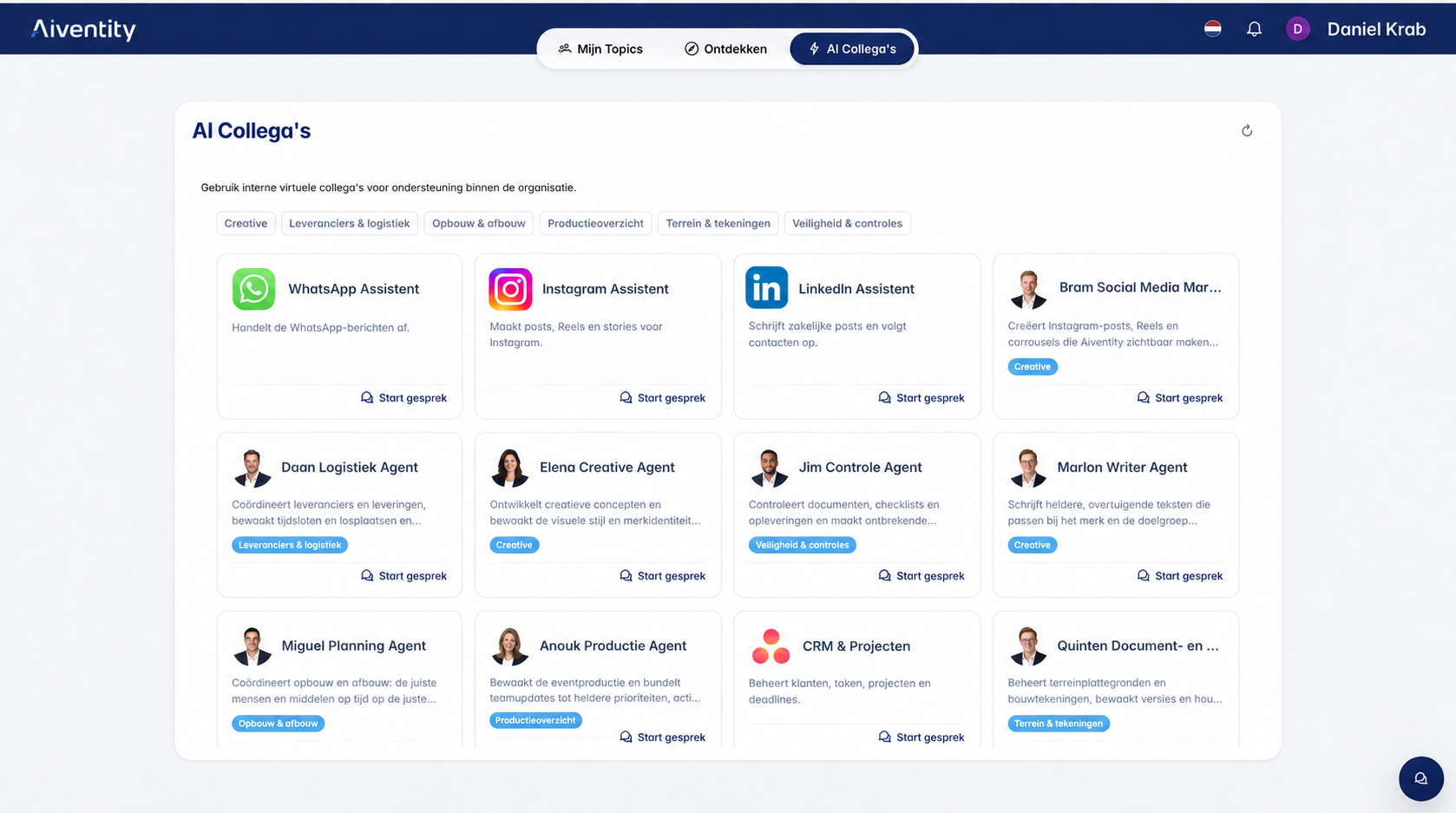
Hover over an agent in the image, or tap to explore.
Choose an agent above. You decide its role, skills, connected tools and permitted actions.
A NEW LAYER OF INTELLIGENCE. YOUR EXISTING STACK.

 slack
slack Notion
 CRM / MICE
 Microsoft 365{ } Your APIs
Choose each agent’s role, skills and connected tools. You decide what it can access and which actions it may carry out.
Start with these ideas. Build your own AI workforce.
Enrich your CRM, qualify leads and prepare proposals and follow-ups. Set the focus to sales, recruitment, partnerships or events.
Create visuals and copy, plan content and publish through connected channels. Choose the tools and skills that fit your brand.
Answer event and programme questions via WhatsApp. Support planning, last-minute changes, reminders and internal communication.
Retrieve information from connected systems, track tasks and carry out actions. Bring in other agents when the workflow needs them.
Roles, skills and integrations are fully customisable.
Bring the model, knowledge and tools together around a clear role. Your team keeps working in its familiar systems.
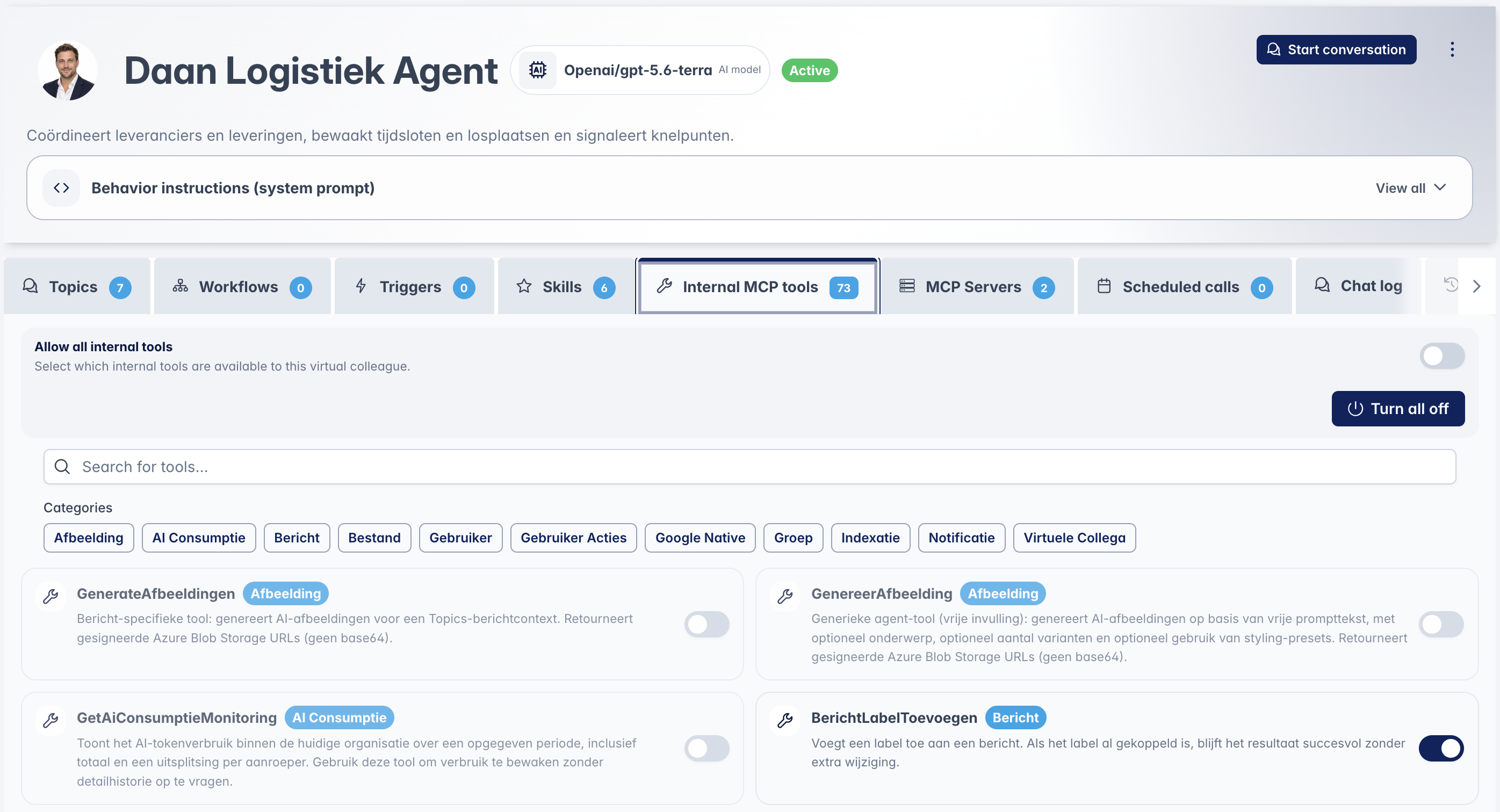
Choose an AI model for each colleague. Use different models within the same team.
Give each colleague skills: reusable instructions, specialist knowledge and your way of working.
Connect your existing systems through APIs and define what each colleague can access.
Here you see Daan, the logistics colleague, with its skills and available tools.
Hover or tap a tab to explore. Swipe through the explanations.
For event agencies, organisers and production teams working across people, suppliers and deadlines.
From the first enquiry and proposal to the programme and final financial reconciliation.
One overview of crew, equipment and locations, from build-up to breakdown.
Keep production, suppliers and live execution connected as plans change.
Autonomy is a setting, not an all-or-nothing decision. Define approval checkpoints, spending limits and escalation rules around each workflow.
Start with drafts and recommendations. Allow selected actions only when your team is ready.
The agent prepares. Your team reviews and acts.
The agent executes after an explicit approval.
Routine actions run within agreed rules. Exceptions come back to people.
Map the workflow and agree on a baseline. Evaluate the pilot, refine the working agreements and expand when the results support it.
Hours spent on repetitive coordination per workflow.
Time from incoming request to a review-ready output.
Overdue tasks and exceptions that need follow-up.
Work completed with the people and tools you have.
Bring us a process that slows your team down.
We’ll explore the fit, the connections and a focused pilot.